

Why Continuous Pricing is the Foundation of Modern Retailing

For years, only a handful of airlines adopted Continuous Pricing (CP). While much of the industry remained cautious of moving beyond traditional fare class models, those early adopters demonstrated its potential to unlock significant revenue gains and improve the traveler pricing experience. Today, after recognizing its value, more airlines are actively discussing CP and determining how to implement it.
This shift reflects a broader industry reality: CP is not an incremental pricing enhancement or experimental revenue management (RM) initiative—it represents a structural capability that enables modern airline retailing.
As airlines move toward offer- and order-based transformation, pricing must be more dynamic, flexible, and responsive. CP meets the need for flexible offer creation by removing the structural limitations of class-based pricing. The value of CP is proven. The question now is how airlines move from agreement to action.
The Time to Act is Now
Globally, airlines are actively pursuing retail transformation initiatives. These programs aim to modernize how airlines create, price, distribute, and service products. At the core of these efforts is a move toward offer-based retailing, where airlines create and price travel products in response to real-time market conditions and traveler needs.
This vision requires pricing capabilities that extend beyond the limits of fixed booking-class logic. CP provides the flexibility necessary to support new retail models by allowing airlines to create more precise price points in response to demand signals. Without CP, carriers remain limited by the strict pricing structures that are a holdover from a now outdated technological era.
The Structural Limitations of Class-Based Pricing
Fixed booking classes have dominated airline pricing for decades. While this model served the industry well in the past, today it creates structural limitations.
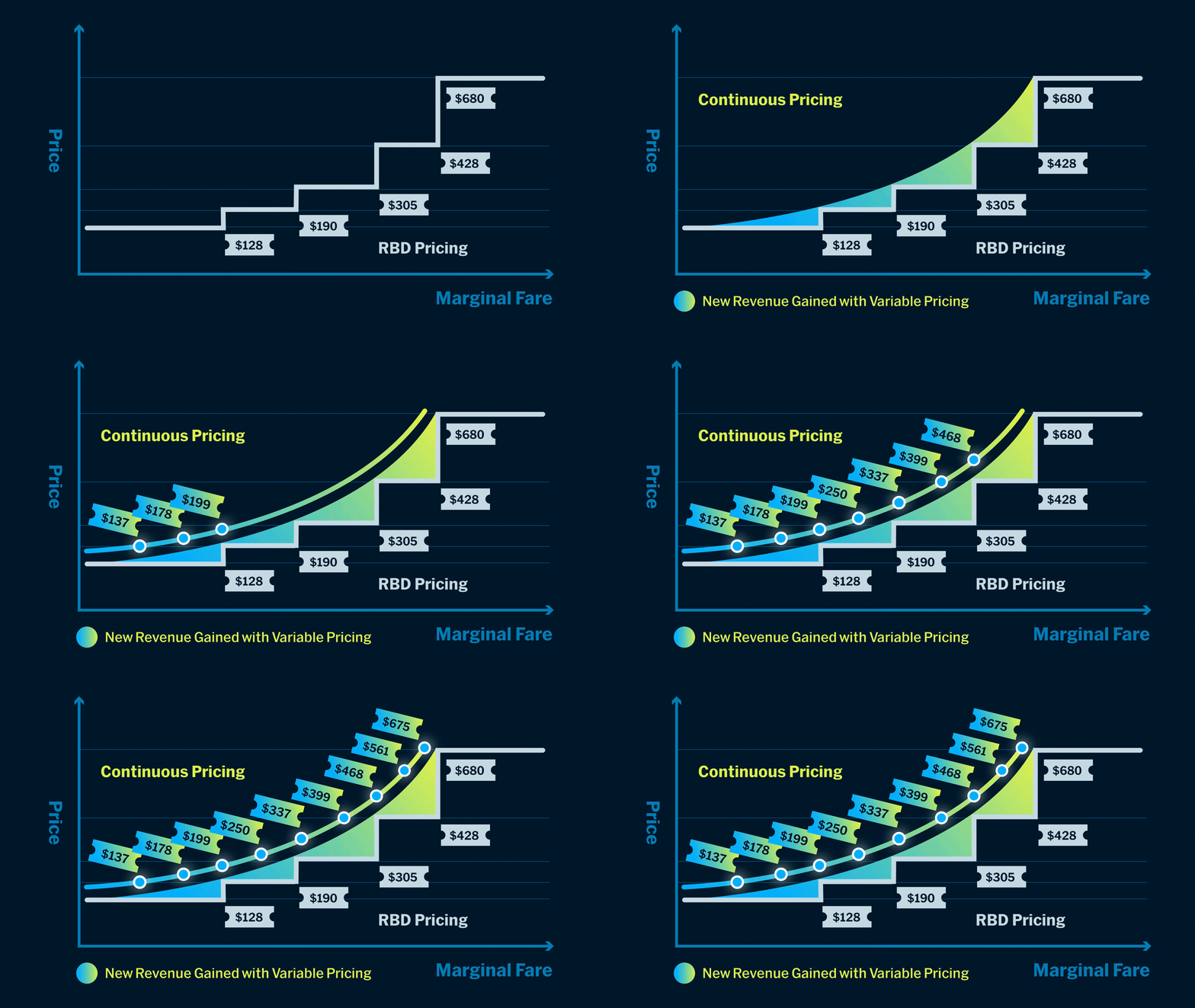
Booking classes create artificial price steps that restrict an airline’s ability to precisely match price to demand. Travelers often face rapid fare jumps between classes, creating price shock that discourages conversion and leaves potential revenue unrealized.
CP removes these barriers by determining prices at the moment of request. Rather than relying on fixed fare ladders, pricing can follow a continuous curve aligned with demand conditions and revenue strategy. The move to dynamic fares fundamentally changes how airlines manage pricing, shifting to a retail approach designed around the customer, not booking classes.
Revenue and Traveler Experience Gains Are Immediate
The benefits of CP extend beyond revenue optimization. By enabling finer pricing increments, airlines can better match price elasticity of demand. This precision allows airlines to capture revenue opportunities that would otherwise fall between traditional fare classes, offering more attractive and competitive prices to travelers. In this way, CP aligns airline commercial performance with traveler expectations, which is a significant objective of modern airline retailing.
Choosing a Continuous Pricing Strategy That Supports Long-Term Transformation
Despite the widespread acknowledgment of CP’s benefits, implementation strategies can significantly vary. Airlines need to review solutions based not only on deployment speed but also on how well they support long-term retail transformation goals.
Building a Class-Free Pricing Foundation
CP should represent a move toward reducing dependency on rigid booking classes. While airlines may continue operating within class-based systems for a while, CP can enable greater pricing granularity separately from traditional systems. Over time, CP creates a path toward dynamic, flexible architecture. The goal is not to replace systems overnight but to build a future-ready pricing foundation that supports an airline’s transition toward offer- and order-based retailing.
Embedding Pricing Within Revenue Management Strategy
RM remains at the center for airline commercial performance. Instead of operating on top of RM decision-making, CP should function as a strategic extension of it, blending revenue strategy and execution. Airlines can maintain consistency across channels when they base pricing decisions on demand forecasts and elasticity modeling. Cross-functional alignment helps ensure CP improves, rather than disrupts, existing revenue optimization frameworks.
Supporting Today’s Ecosystem While Enabling Tomorrow’s Model
Long-standing technology providers, including distribution platforms, reservation systems, servicing tools, and digital booking experiences, deeply interconnect with airline IT environments. To successfully implement CP, these systems must support open integration and allow dynamic pricing capabilities to connect seamlessly across ecosystems. In practice, this can present challenges, as legacy technologies were not designed around dynamic offer management. Overcoming these constraints is essential for airlines seeking to introduce CP while continuing to operate within an existing infrastructure.
Explore Integration Guide: How Airlines Can Adopt Continuous Pricing
The PROS Perspective: Enabling the Next Generation of Airline Retailing
Airline retailing is shifting from static fare filing toward continuous, science-driven offer optimization. PROS Continuous Pricing leverages predictive analytics and elasticity-based modeling that govern optimal prices in real time, at the moment of request. The airline’s RM strategy is fully aligned with these decisions, ensuring pricing supports revenue objectives while improving the traveler’s experience. Importantly, PROS CP works within today’s class-based environments while establishing class-free pricing architecture for the future.
Continuous Pricing as a Structural Capability
The airline industry is no longer questioning the value of CP. Today, it’s acknowledged as a foundational capability driving revenue optimization, modern retail strategies, and the transition to offer- and order-based retailing.
With PROS CP, airlines can transform pricing from a structural constraint into a strategic advantage. Early adopters such as Lufthansa Group and Air Canada demonstrate this goal is not only achievable but also beneficial. In a competitive market, the question is no longer whether CP will be standard; rather, it’s which airlines will lead and which will be forced to follow.
Frequently Asked Questions
Continuous pricing is a modern retailing strategy that allows airlines to create more dynamic, flexible, and responsive pricing than traditional, class-based models. This capability supports the industry’s shift toward offer- and order-based transformation, unlocking significant revenue gains and improving the traveler experience.
For decades, airlines have used a fixed booking class model. This system creates artificial price jumps between fare classes, which can cause price shock for travelers and lead to lost revenue for the airline. Because it restricts an airline’s ability to precisely match price to demand in real time, this outdated model is not designed for modern customer expectations or commercial strategies.
Continuous pricing delivers immediate gains in both revenue and traveler experience. By enabling finer pricing precision, it allows airlines to better match prices to demand, capturing revenue that would otherwise be lost between traditional fare classes. Travelers benefit from more attractive prices and smoother price changes.
Airlines should select a continuous pricing solution that supports their long-term retail transformation goals, not just one that offers rapid deployment. The strategy should focus on building a future-ready pricing foundation by reducing dependency on rigid booking classes, embedding pricing within the revenue optimization process, and ensuring the solution can integrate with the existing IT ecosystem while enabling future dynamic offer management.
PROS Continuous Pricing is designed to function within the airline’s current class-based environment while simultaneously building the foundation for a future, class-free pricing architecture. It aligns the airline’s revenue management strategy with real-time, science-driven pricing decisions, ensuring today’s pricing supports long-term revenue objectives and prepares for the next generation of offer optimization.