




A traveler is interested in a destination, discovers an appealing fare, and clicks through to the airline’s website. What happens next can determine whether that interest becomes a booking.
Does the traveler find the price that caught their attention? Does the page answer their questions? Is there a clear path from exploring a trip to purchasing it?
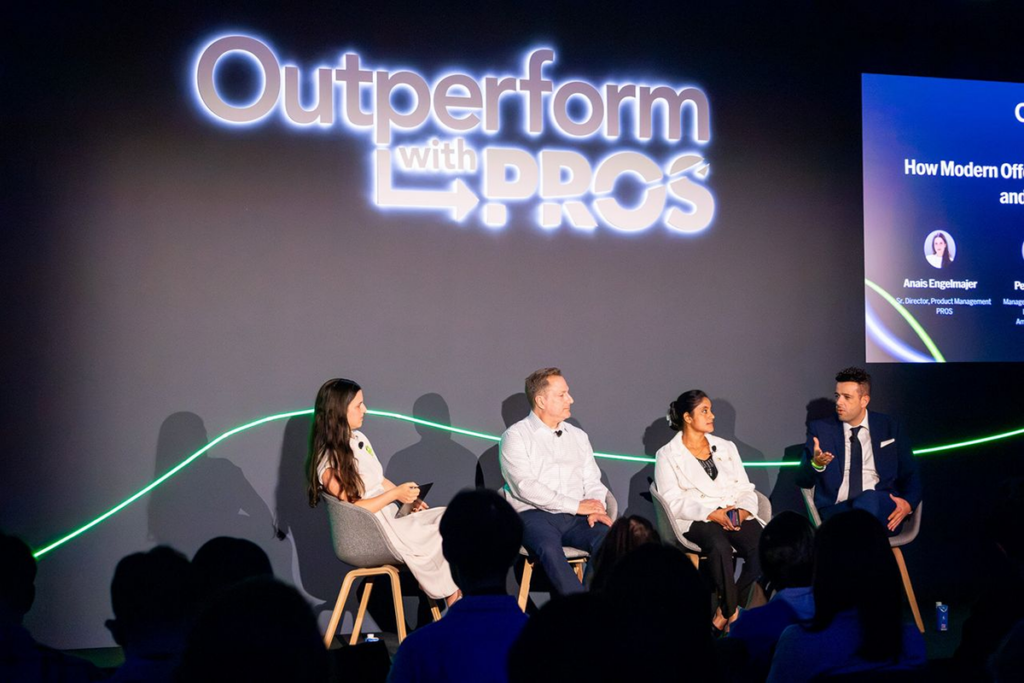
At the 2026 PROS Outperform event, leaders from American Airlines, SriLankan Airlines, and Cyprus Airways shared their strategy to make the best of those moments. In a panel moderated by Anais Engelmajer, Senior Director, Product Management at PROS, the three airlines explored how relevant content, real-time fares, and connected digital experiences can turn discovery into measurable commercial results.
Although their approaches reflect different priorities and resources, they all demonstrate how offer marketing can help airlines connect what travelers want to know with what they are ready to buy.
Match the Content to the Traveler’s Intent
For American Airlines, the opportunity began with reconsidering what its fare pages could do.
The airline had been using PROS airTRFX pages to generate demand through organic search, but the team saw potential to make those pages even more helpful to travelers and more effective at bringing them into the booking journey.
Furthering its collaboration with PROS, American Airlines undertook a one-year project to reimagine the customer experience.
“We redeveloped the content to provide destination information and also meet the customer where they were at based on their intent and how they arrived at the page,” said Pedro Noda, Manager, Digital Content and Localization at American Airlines.
That meant expanding beyond fare displays to include information that helps customers make travel decisions: destination content, international travel guidance, and FAQs. The redesigned pages combined that content with custom components developed through collaboration between American Airlines’ design team and PROS.

At the time of the session, the redesign had been launched three weeks earlier. The focus so far had been on learning: how customers engaged with the content, where the pages appeared in searches, and how effectively they helped travelers enter the booking path.
The lesson for airlines is practical. A traveler researching a destination may need different information from someone ready to select a flight. airTRFX pages can serve both needs by pairing useful answers with relevant offers and a clear next step.
Keep the Offer Connected Across Touchpoints
For SriLankan Airlines, a priority was consistency between the offer that attracts a customer and the experience that follows.
The airline had developed more than 4,000 pages using PROS airTRFX, covering different destination and market combinations. It then brought real-time fares to its homepage and airTRFX pages, before extending them into paid campaigns on Google and social media.
Previously, including fares in advertisements had created a maintenance challenge because airline prices change frequently, and manual updates are difficult to sustain.
Real-time fare content provides a way to bring prices into campaigns without relying on that manual process. More importantly, it helps ensure that the offer customers see in an ad remain consistent throughout their journey.

For Bimali Malalasekara, Manager Digital Commerce at SriLankan Airlines, that consistency is closely tied to customer trust. An advertisement creates expectations. If the customer clicks through and encounters something different, friction enters the journey.
The commercial objective for the carrier was clear: paid media investment needed to generate bookings as well as attention.
SriLankan Airlines began with a small number of campaigns and compared performance before and after introducing real-time fares. Malalasekara reported improvements in click-through and conversion rates, prompting a gradual rollout to additional campaigns.
She also highlighted a 30% increase in the PROS Offer Marketing solution’s contribution to the airline’s online sales.
The takeaway is to treat the advertisement, landing page, and booking journey as connected parts of the same experience. Relevant pricing helps customers evaluate an offer earlier and gives them a stronger reason to continue to booking.
Put Offers at the Center of the Digital Storefront
Cyprus Airways approached the opportunity from the perspective of a small airline with limited resources.
It wanted a stronger digital presence and more direct sales. Having already seen results from Offer Marketing, the airline challenged PROS to make airTRFX its main website, alongside a booking engine change and the integration of FastSearch shopping capabilities. The project was delivered in five months.
For Pavlos Sarkas, IT Manager at Cyprus Airways, the change addressed a familiar problem: marketing messages and current prices were not always aligned. A traveler might see a promoted fare and then struggle to find it, while digital, marketing, and revenue management teams worked to coordinate updates.
Bringing offers into the storefront helped reduce that manual coordination. It also supported new route promotion. As future flights became available, customers could discover and book them through the website without the same level of intervention previously required to populate pricing information.
The airline witnessed increased bookings, stronger direct-channel performance, and more returning visitors. Sarkas also described a continuing appetite for automation, particularly given the size of the airline’s digital team.
The broader lesson is that the homepage can help travelers discover what is available and move toward a purchase. Current, visible offers give visitors something concrete to explore.
Make Content Useful for New Ways of Searching
Discovery is changing as travelers use conversational tools alongside traditional search.
American Airlines is working with PROS to understand how its content can appear in those experiences and encourage travelers to visit the airline’s pages.
“Our content is really written in a way that helps answer the questions that customers are asking during their search,” Noda said.
That approach connects emerging search behavior with an established customer need, namely useful answers.
For airlines, it means evaluating whether destination and route content addresses the questions travelers bring to their research. American Airlines is also considering that performance across its global markets, recognizing that discovery extends beyond a single country or language.
Visibility is one part of the objective. The next is ensuring that travelers who arrive find relevant information, appropriate offers, and a straightforward route into booking.
Keep Improving the Experience
Modernization emerged as an ongoing practice across the panel.
American Airlines is using engagement data to guide further development. SriLankan Airlines is expanding real-time fares across more campaigns. Cyprus Airways is exploring additional opportunities in ancillary promotion, automation, and offer marketing.
“Our goal is to continuously evolve the product and not just let it sit there,” Noda said.
That mindset helps airlines get more from the capabilities they already have. It creates a cycle of learning: observe how travelers discover and engage with offers, identify friction, and improve the experience.
Malalasekara captured the shared ambition:
“I would say it’s all about offering the right offer to the right customer at the right time through the right platform.”
For airline customers, each of those elements matters. Relevant content earns attention. Current fares make the opportunity tangible. A connected experience helps turn that interest into a direct relationship and a booking.
Explore PROS Offer Marketing solutions to discover how relevant content and real-time offers can help your airline turn digital discovery into revenue.