
Geopolitical conflicts. Pandemic waves. Volcanic ash clouds. Severe weather. When large‑scale disruptions hit, airline schedules can change overnight. Flights are cancelled, passengers rebook in droves, and booking patterns stop resembling anything close to normal.
If revenue management (RM) allows these crisis‑era booking patterns to flow straight into the forecast, the system learns from data that does not reflect genuine demand. The effects can linger long after operations stabilize, blurring demand predictions and negatively impacting RM decisions.
This blog explores why disruptions create “bad data” for RM and how airlines can prevent crisis‑driven patterns from distorting future forecasts using advanced tools in their systems. With a practical and reliable disruption‑response playbook, RM analysts can keep forecasts accurate through uncertainty and position their networks to rebound quickly when demand normalizes.
Why Disruptions Create “Bad Data” for Revenue Management
Two things are typically observed during major disruptions: flights get cancelled at scale, or booking patterns shift dramatically. Even if the disruption itself lasts only days or weeks, its effects on demand can linger much longer, requiring revenue management teams to actively shape how these abnormalities influence future forecasts.
When mass cancellations occur, they generate rebookings that spill into future departure dates. If left unmanaged, the system may interpret these shifts as genuine demand rather than operational intervention. Similarly, zero demand that appears simply because service wasn’t operating can create misleading signals.
Disruptions can also surface in the form of abnormal demand, even when flights continue operating. Bookings may plunge for weeks due to suppressed demand or intentional restrictions, and recovery may be slow and uneven. These dips, followed by partial rebounds, do not represent true steady-state demand. If the dips are allowed to flow unfiltered into the model, the RM system may overfit to crisis conditions and carry distorted expectations well into the recovery period, leading to poor RM decision support.
RM analysts need forecast-protection tools that automatically recognize the lack of scheduled service, filter out rebooking effects, and protect forecasts from absorbing irregular patterns to ensure confidence once the crisis passes.
Reliable Forecast‑Protection Tools to Manage Crisis‑Era Data
When disruptions distort booking patterns due to widespread cancellations, suppressed demand, or uneven early-recovery behavior, RM analysts need to take a proactive role in shaping what the forecasting engine learns. Modern RM practice offers a set of tools and approaches that help analysts keep forecasts grounded in true demand rather than crisis noise, so your demand expectations remain stable, reliable, and aligned with real market behavior.
Manage Data Inputs with Censoring
Censoring is the primary method for excluding periods that shouldn’t influence the forecast model. This method allows teams to cleanly remove weeks or months affected by major incidents, service suspensions, or severe demand drops. By treating these observations as missing rather than legitimate zeros or valid signals, the system avoids embedding patterns that don’t represent steady-state demand.
RM analysts should apply censoring when crisis-era observations don’t reflect the demand they expect to return. These observations can include periods of extended cancellations or minimal service, unusually low bookings, and early recovery phases when demand is still stabilizing. There is no fixed limit on how long censoring should remain in place; its duration should align with the commercial reality of the market. Many airlines choose to censor multi-month windows and then reassess as conditions evolve, ensuring the forecast continues to reflect healthy, representative demand patterns.
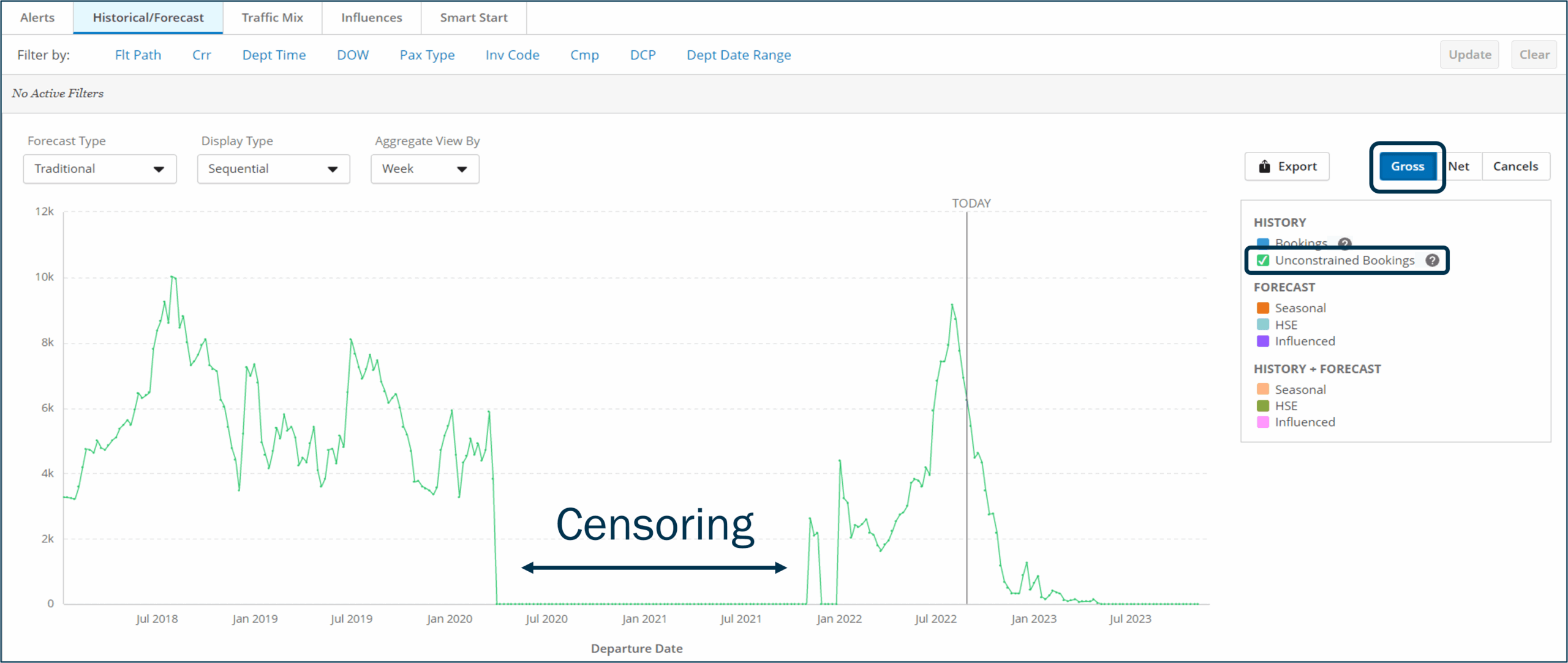
Censoring in PROS Revenue Management
Adjust Data with Influences
Once distorted periods are set aside, analysts can apply influences to finetune the remaining data, adjusting forecasts up or down when market recovery is expected or when aggregate booking patterns are evolving.
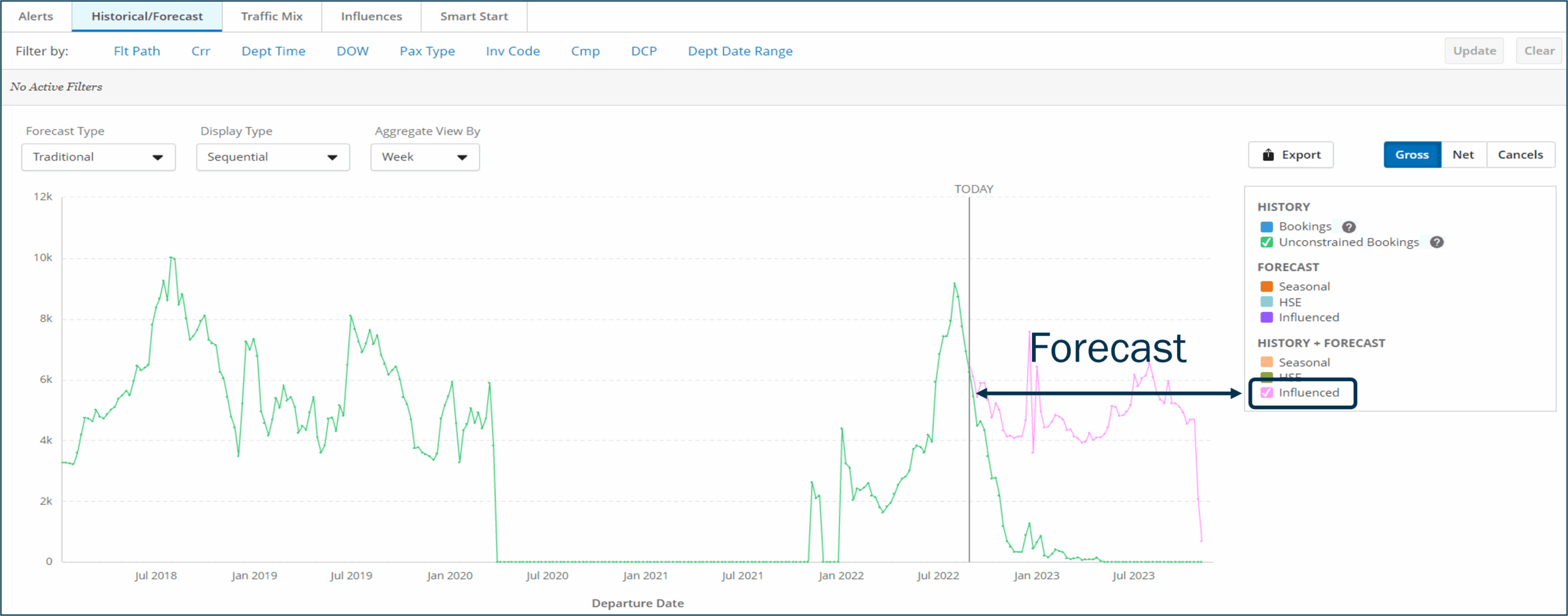
Influences in PROS Revenue Management
Being deliberate and timely with these interventions ensures the system learns from healthy patterns, helps avoid long-lasting distortions, and supports more accurate pricing and inventory decisions as conditions stabilize.
A Few Real-World Examples
Here are a few practical scenarios to demonstrate how these tools work in day‑to‑day airline operations:
- Cancelled flights handled correctly: Your inventory and reservation systems mark flights as canceled. The schedule file to the Revenue Management system reflects those cancellations and they are automatically treated as “no scheduled service,” so they’re ignored with no extra work required.
- Operating but abnormally low demand: One of your markets stayed open but demand cratered for ten weeks. You censor those departure weeks and apply a modest upward influence for the next quarter to reflect expected rebound. Forecasts stop “learning the trough” and your forward classes don’t get starved.
- Show-up anomaly day: A weather-related meltdown produced outlier no-shows. You mark the day as “bad data” for show-ups so it doesn’t distort your future show-up rate.
Disruptions are inevitable, and airline teams should be prepared to prevent their revenue management systems from memorizing crisis noise. The key is to apply available RM tools proactively, so forecasts remain grounded in true demand, not short‑term volatility. By using these techniques to keep demand signals clean, analysts ensure pricing, availability, and inventory decisions support recovery instead of working against it. Embedding these steps into your RM playbooks today enables teams to act quickly, maintain forecast integrity, and keep demand signals clean the next time turbulence hits.
Have questions about crisis management tools in PROS RM? Contact your Customer Success Manager and visit PROS Connect to learn more.
Frequently Asked Questions
PROS RM provides airlines with advanced tools to manage bad data inputs, allowing for more accurate forecasting, capacity planning and decision-making in a disrupted market.
Clean demand signals refer to accurate and reliable indicators of market demand, stripped of noise caused by anomalies like mass cancellations or irregular bookings. They help airlines forecast demand more effectively and strategize operations amidst market uncertainties.
Yes, PROS RM incorporates predictive analytics to adjust forecasts in response to real-time market changes, ensuring airlines maintain reliable and adaptable demand forecasting even during volatile periods.
Yes, PROS RM equips airlines with data-driven insights and tools that not only address immediate recovery challenges but also set the foundation for sustainable revenue management and growth in the long term.