
In today’s competitive airline industry, businesses must use every tool available if they want to maximize their revenue potential. By integrating the two most important elements (data analytics and SEO insights) effectively, airlines can drive enhanced customer acquisition and unlock significant revenue potential.
By leveraging the power of airTRFX airlines can capture organic traffic effectively and achieve an improved SEO performance.
Katharina Warzel, Senior Manager of Data Analytics, and Enmanuel Tirado, Head of SEO and Digital Insights, recently shared their insights on this innovative approach. Here, we delve into their strategies and successes, illustrating how shopping data and SEO can drive enhanced customer acquisition.
Watch the full session:

Bridging Revenue Management and Marketing
Katharina Warzel opened the discussion by highlighting the transformative power of integrating shopping data with revenue management. “When we started working on offer marketing more than a decade ago, it was very difficult to get access to updated route lists and promotional activities,” she explained. By centralizing data, the team improved decision-making across various channels, which in turn filled incremental seats and maximized revenue per seat through fare elasticity and demand analysis.
Katharina emphasized the creation of a commercial command center (CCC) for customers, where stakeholders can monitor and analyze data in real-time. This approach enhances communication and decision-making, leading to better business outcomes. The data suite includes dashboards tracking metrics such as demand and bookings by date and route, offering a comprehensive view of market trends.
Actionable Insights and Data Integration
To further support customers, the data suite offers actionable insights and raw data feeds, enabling integration with existing tools and processes. This setup empowers revenue management (RM) and marketing teams to make informed decisions based on historical, real-time, and predictive data. Katharina highlighted the importance of using these insights to optimize load factors, search volume, and look-to-book rates, ultimately capitalizing on demand.
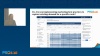
Katharina also introduced upcoming features in airTRFX, their main product control tool. The new data insights tab will guide users through implementing marketing best practices to capture existing demand for specific routes. This interactive guide will provide step-by-step instructions to assess demand, create route pages, and launch targeted campaigns across various channels.
Watch Katharina’s video:
SEO as a Revenue Driver
Enmanuel Tirado then took the stage to discuss the vital role of SEO in the airline industry. “Our job is to make our customers rank on the first page of Google when people search for flights,” he stated. Enmanuel’s team focuses on technical SEO, content optimization, and link building to enhance website performance and visibility.
Using airTRFX, airlines can dynamically generate thousands of landing pages across multiple markets, incorporate fare modules, and ensure optimal interlinking structures. This approach has led to significant improvements in search rankings and organic traffic for several airlines.
Success Stories and Data-Driven Results
Enmanuel shared impressive success stories from airlines that adopted airTRFX. For example, Azul, a major airline, achieved a 90% visibility rate in its main market within a year. Other airlines in Europe, Asia, and North America also saw substantial increases in their search rankings and organic revenue after implementing airTRFX.
The aggregate data revealed a median increase in organic revenue of $1.9 million in the first year alone, doubling by the third year. Airlines that migrated their existing flight pages to airTRFX experienced a 61% increase in keywords ranking in the first position and a 60% improvement in booking completion rates.
To see how airTRFX helped Pacific Coastal increase its online revenue by 15% you can read their success story here.
The Future of SEO and Data Integration
Despite concerns about AI and its impact on SEO, Enmanuel remains optimistic about the future. He highlighted key takeaways, such as the significant increases in incremental traffic and non-branded keyword rankings, underscoring the ongoing value of SEO for airlines. “SEO is not dead, not quite yet,” Enmanuel concluded.
In conclusion, unlocking revenue potential in the digital age requires a strategic approach, combining shopping data and SEO insights. This approach offers a powerful strategy for airlines to enhance customer acquisition and maximize revenue. Continuous monitoring, analysis of results, and optimization are key to maintaining the effectiveness of this strategy. By leveraging advanced data analytics and SEO techniques, airlines can stay competitive and meet the evolving demands of their customers.
Watch Enmanuel’s video:
For more information or guidance on implementing these strategies, please reach out to your customer success manager or connect with Katharina and Enmanuel after their presentation. Together, they are paving the way for a more data-driven and customer-centric approach in the airline industry.